Why Music Gives You Chills
That shiver down your spine is literally dopamine — your brain's reward system firing at a moment of musical surprise it didn't see coming.
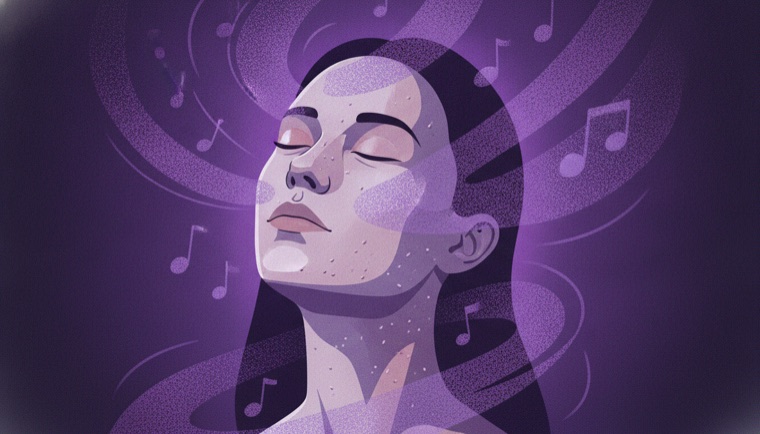
The moment the room changes
The pattern shows up in real listening, not just theory. In studies of musical chills, people often mark peaks at moments where expectation is broken and then resolved. Listeners report that the pleasure feels strongest when they can sense what should happen next, but the music withholds it long enough to sharpen the arrival. That delay matters; if the surprise is too chaotic, it becomes confusion instead of delight.
This is why a cheap trick and a masterstroke can sound similar on paper but feel worlds apart in the body. Both use surprise. Only one times the surprise so the brain can cash it in as meaning.
The brain likes to guess
This helps explain why chills are common in passages that stretch suspense without collapsing it. Think of the long buildup before the final entry in a pop anthem, the held silence before a choir returns, or the delayed harmonic payoff in a film score. The listener’s forecast is strained, but not shattered. When the music finally resolves, the correction feels rewarding because the system that was predicting has also been waiting.
The pleasure is not just in getting what you expected. It is in the exact shape of the mismatch. A resolution that comes too early is bland; one that never comes can be frustrating. The chill lives in the narrow band where surprise and confirmation overlap.
The chill lives in the narrow band where surprise and confirmation overlap.
Dopamine arrives at the right second
The strongest evidence for the dopamine link came from studies that measured the brain during musical peaks, not after the fact. In work associated with neuroscientist Robert Zatorre and colleagues, including studies by Valorie Salimpoor, listeners who reported chills showed dopamine release in reward-related circuitry. One set of findings suggested a split pattern: anticipation can engage one part of the reward system, while the actual peak of pleasure engages another. That division fits the feeling itself — wanting the note, then being hit by it.
The timing matters because dopamine is often described too simplistically as a chemical of pleasure. In the music case, it looks more like a signal that a meaningful event is arriving exactly when the brain has prepared for it. The prediction error does not just surprise you; it concentrates attention, then the resolution converts that tension into reward. Music can do this cleanly because it plays with time. It can hold a note for two beats or twenty, and those beats become physiological pressure.
There is a reason the goosebumps can feel almost mechanical once you know the trick. A composer introduces a tension, delays the release, and then lands on a chord that is both unexpected and inevitable. The reward system seems to respond to the sequence, not just the endpoint. That is why frisson can feel earned rather than random.

The reward system seems to respond to the sequence, not just the endpoint.
Why some people feel it and others don’t
Not everyone gets chills from music, and that variation is part of the story. People differ in musical training, emotional responsiveness, and how strongly they lock onto structure while listening. Someone who hears chord movement as a set of anticipated turns may be more likely to feel the snap of resolution than someone who hears the same passage as a blur of sound. Familiarity also matters: the more you know a piece, the better your brain can predict its breaks and payoffs.
This is one reason repeated listening can make a song more powerful rather than less. The first hearing teaches the map; the second lets the listener savor the route. Once you know where the break is coming, the body can brace for it, and that anticipation can intensify the release. The chill is not ruined by foreknowledge. In many cases, foreknowledge is what makes the reward system light up.
Even the social setting can amplify the effect. A live performance in a hall, with the room quiet enough to hear a bow change or a singer’s breath, gives the brain more cues to predict with. When the band pauses and thousands of people inhale together, the next entrance lands not just as sound but as collective timing. The body notices when a pattern is about to be paid off.
A tiny reward for a big human skill
That may be why the best chills feel both intimate and impersonal. Intimate, because they happen inside a single listener’s nervous system. Impersonal, because the mechanism is reproducible: set up expectation, violate it, resolve it, and the reward system often answers. The music does not merely express emotion; it engineers the conditions for it. In that sense, frisson is less a mysterious bonus than one of the clearest places where hearing becomes prediction, and prediction becomes pleasure.
3 things to remember
- 1Frisson often appears when music breaks a pattern and resolves it with perfect timing, not when it is simply loud or beautiful.
- 2Neuroscience studies have linked musical chills to dopamine release in reward circuitry during anticipation and peak pleasure.
- 3People feel chills more easily when they can predict structure well enough to savor a surprising turnaround.
Conversation spark
The goosebumps are not the mystery; the timing is.
Go deeper